Concrete and pavers can both create a durable, attractive patio, but they solve the problem in different ways. The better choice depends on the property, design, drainage, maintenance expectations, and budget, not on a universal winner.
The Short Answer
Choose concrete when you want a continuous surface, a clean or custom finish, and an efficient way to cover a defined area. Choose pavers when modular patterns, individual-unit repair, and a wider range of textures are higher priorities.
In either case, the finished surface is only as dependable as the planning beneath it. Excavation, base preparation, grade, drainage, edge conditions, and connections to the house and landscape all matter.
Concrete Patio Advantages
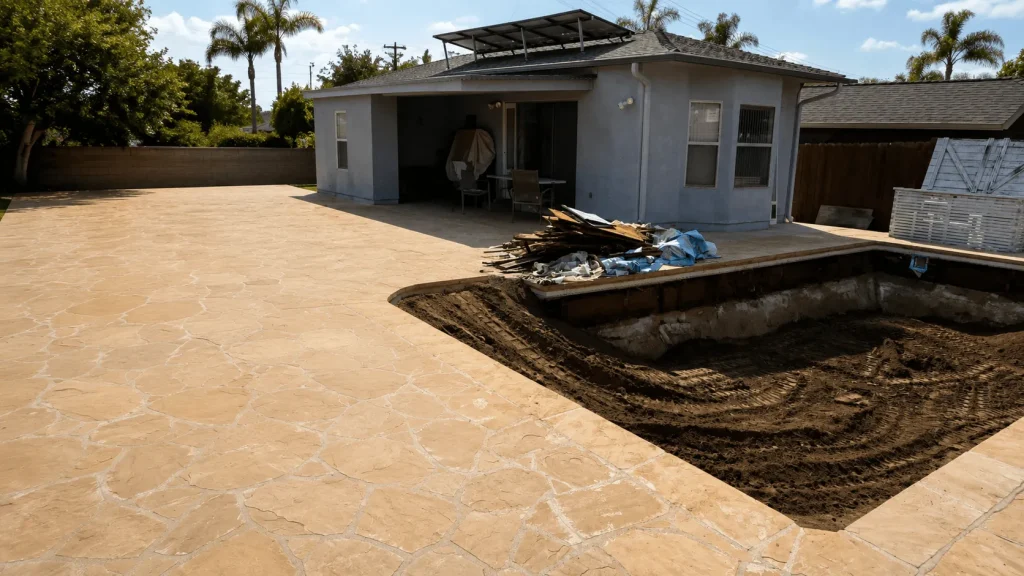
Concrete can be formed to fit curves, angles, steps, and transitions. Finish choices can range from straightforward broom-finished flatwork to decorative color, texture, or scoring, depending on the project.
- Creates a continuous, stable patio surface.
- Can be shaped around the available yard and adjacent features.
- Offers multiple finish options.
- Works well as part of a coordinated concrete and landscape project.
- Can be cost-effective for some layouts and scopes.
See the company’s San Diego concrete services for related applications.
Concrete Patio Considerations
Concrete is not maintenance-free. Movement, soil conditions, drainage, tree roots, and installation details can contribute to cracking. Control joints help manage where cracking occurs but cannot guarantee that a slab will never crack.
A damaged section may also be more visible to repair than an individual paver. Ask how the base, reinforcement where applicable, joints, thickness, drainage, and curing will be handled for your specific project.
Paver Patio Advantages
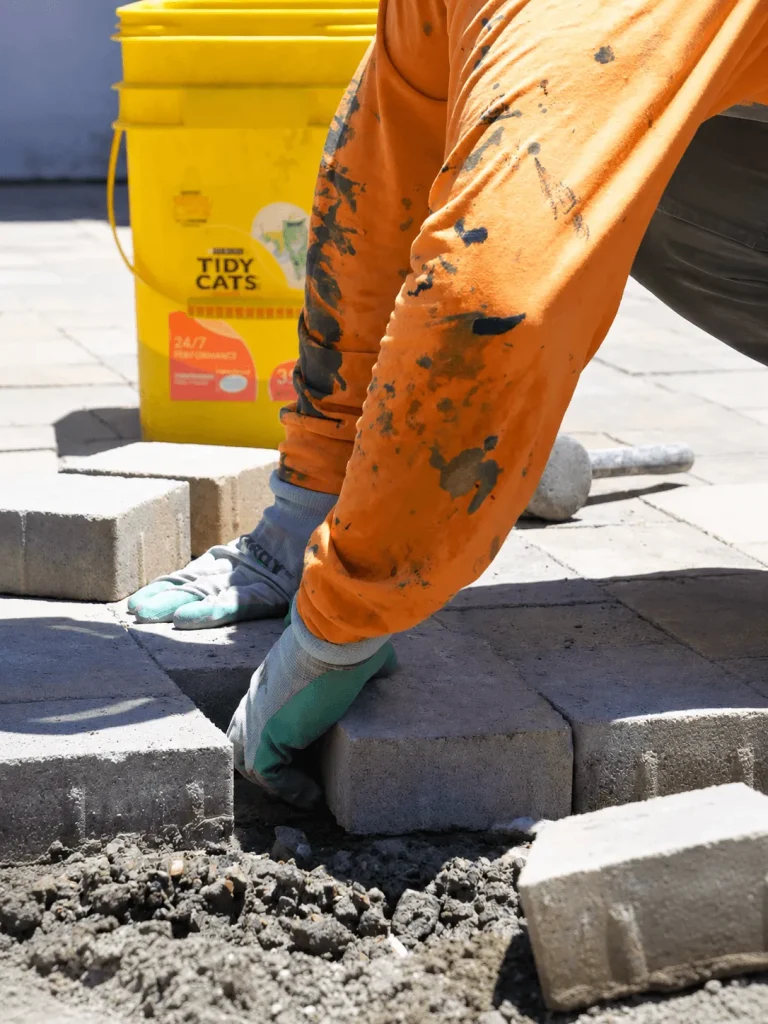
Pavers create a modular surface assembled from individual units. They are available in many shapes, colors, and laying patterns, which makes them useful when the patio is intended to add detailed visual character.
- Individual units can often be lifted and replaced.
- Patterns and borders can define outdoor rooms or transitions.
- The modular surface can accommodate some movement differently from a single slab.
- Repairs or access to certain underground areas may be less visually disruptive.
- Pavers coordinate naturally with walkways, pool surrounds, and other hardscape.
Explore patio installation in San Diego for a broader view of patio planning.
Paver Patio Considerations
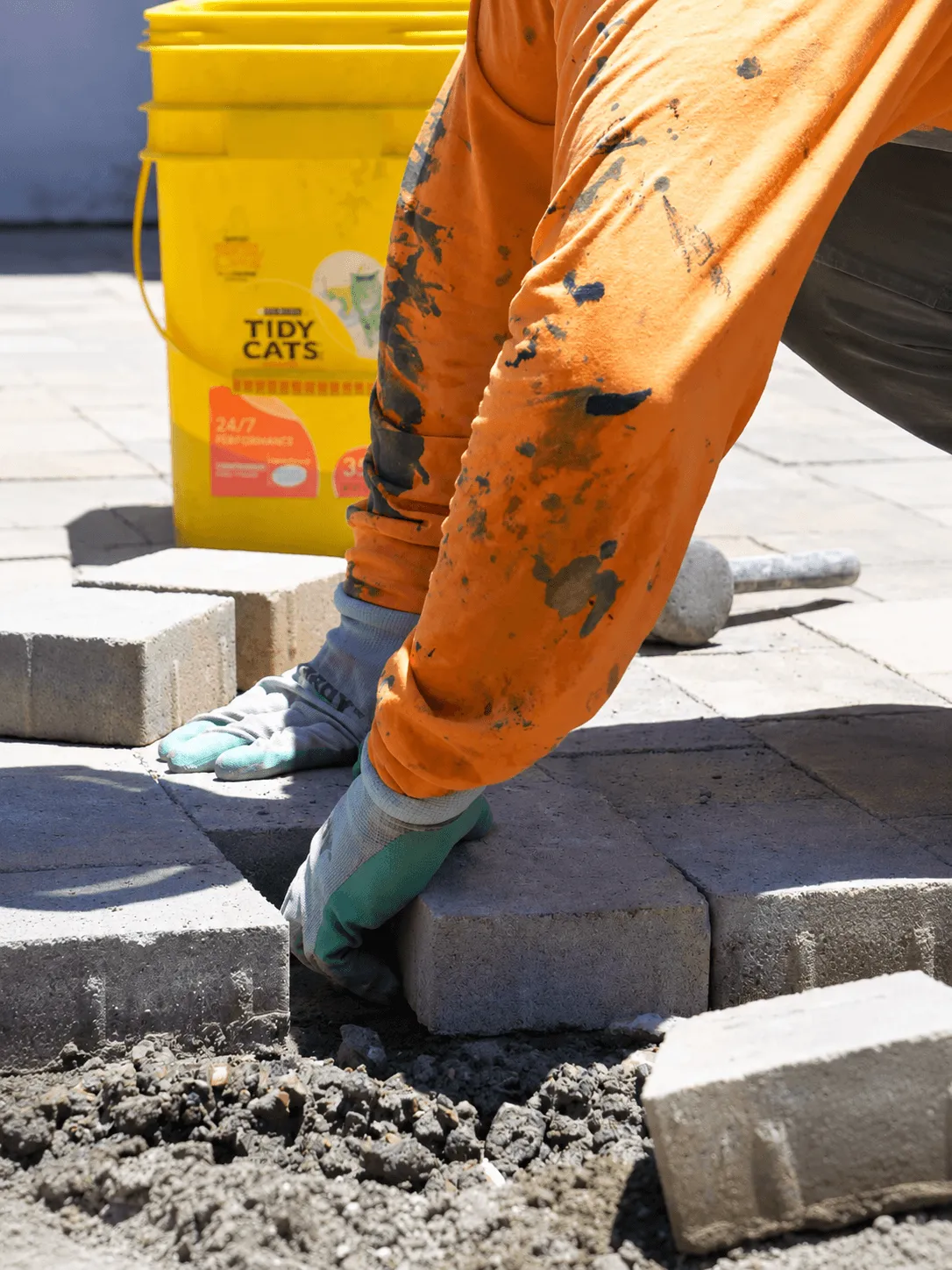
Paver performance depends heavily on excavation, base depth, compaction, bedding, edge restraint, and drainage. Poor preparation can lead to settlement or movement.
Joint care may be needed over time, and weeds or ants can become an issue when joints and edges are neglected. The installed cost can also be higher than straightforward concrete depending on the selected product, pattern, access, and amount of cutting.
How San Diego Site Conditions Affect the Choice
San Diego properties vary from relatively flat urban lots to sloped yards with retaining walls and constrained access. Expansive or disturbed soils, runoff paths, irrigation, roots, and the elevation at doors all influence the detail of a patio installation.
Drainage should be planned before the surface is chosen. Water needs a deliberate route away from structures and sensitive landscape areas. A beautiful material cannot correct a poorly planned grade.
Compare the Whole Installed System
- Excavation and disposal
- Base material and compaction
- Drainage and finished slope
- Concrete thickness or paver specification
- Joints, reinforcement, bedding, and edge restraint as applicable
- Steps and transitions
- Access limitations
- Sealing or ongoing maintenance
- Warranty and exclusions
Comparing complete scopes is more useful than comparing a price per square foot. Two estimates may use the same surface material while proposing very different preparation.
Which Patio Material Fits Your Project?
Concrete is often a strong fit for homeowners who value a continuous, practical surface and a streamlined aesthetic. Pavers are often a strong fit when pattern, texture, modular repair, and defined borders are important.
A mixed design can also work. For example, concrete may form the main patio while paver details, turf joints, planting, or retaining walls add contrast. The right answer is the one that fits the architecture, yard, and intended use.
Plan Your Patio Project With a Local San Diego Contractor
Jake’s Landscape & Construction brings landscape, hardscape, concrete, irrigation, and demolition capabilities together under one experienced local team. Since 2013, the company has focused on clear communication, honest guidance, fair pricing, and doing the work right the first time. CSLB #1070714.
Request a free on-site estimate to discuss your property, priorities, budget, and timeline.